VINCI Airports, the Ille-et-Vilaine Chamber of Commerce and Industry, and SEALAR, have been chosen to ensure the modernization and development of Rennes and Dinard airports
The shareholder group is pursuing an ambitious and sustainable project for the development of the Rennes and Dinard Bretagne airports.
This project was designed to meet the strong expectations expressed by the community and its residents: strengthening connectivity options, modernizing infrastructure and services, accelerating the environmental transition, and achieving financial independence.
Following a competitive bidding process lasting almost two years, the offer submitted by VINCI Airports, the Ille-et-Vilaine Chamber of Commerce and Industry, and SEALAR, for the management of Rennes and Dinard Bretagne airports was chosen by the elected officials of the Brittany regional council.
The choice of the Brittany Region demonstrates renewed confidence in a model combining the operational expertise of VINCI Airports, the world's leading private airport operator, the strong local presence of the Ille-et-Vilaine Chamber of Commerce and Industry and SEALAR. Together, the partners will work to strengthen the airport's positive impact on local people, businesses, and the region's tourism economy.
The upcoming concession now opens a new era of modernization and sustainable development for Brittany's airport public service. In line with the expectations expressed by the Brittany Region, the partners will implement a sustainable project based on four priorities:
Strengthening national and international connectivity.
Modernizing the airport and developing the quality of service offered to passengers and airlines.
Accelerating the decarbonization of platform activities.
The financial autonomy of the operation.
The project includes an ambitious development plan at the national level and particularly at the international level.
As such, the 2026 flight schedule already foreshadows this ambition with 15 destinations offered via direct flights operated by 8 airlines. This means the opening of new routes (Ajaccio, Bastia, Seville), the return of strategic destinations (Dublin and Manchester) and the increase in frequencies in several key markets (London Gatwick, Marseille, Nice).
Nearly 200 destinations are also accessible by connecting flights via links to the airport hubs of Paris Charles-de-Gaulle and Amsterdam-Schiphol.
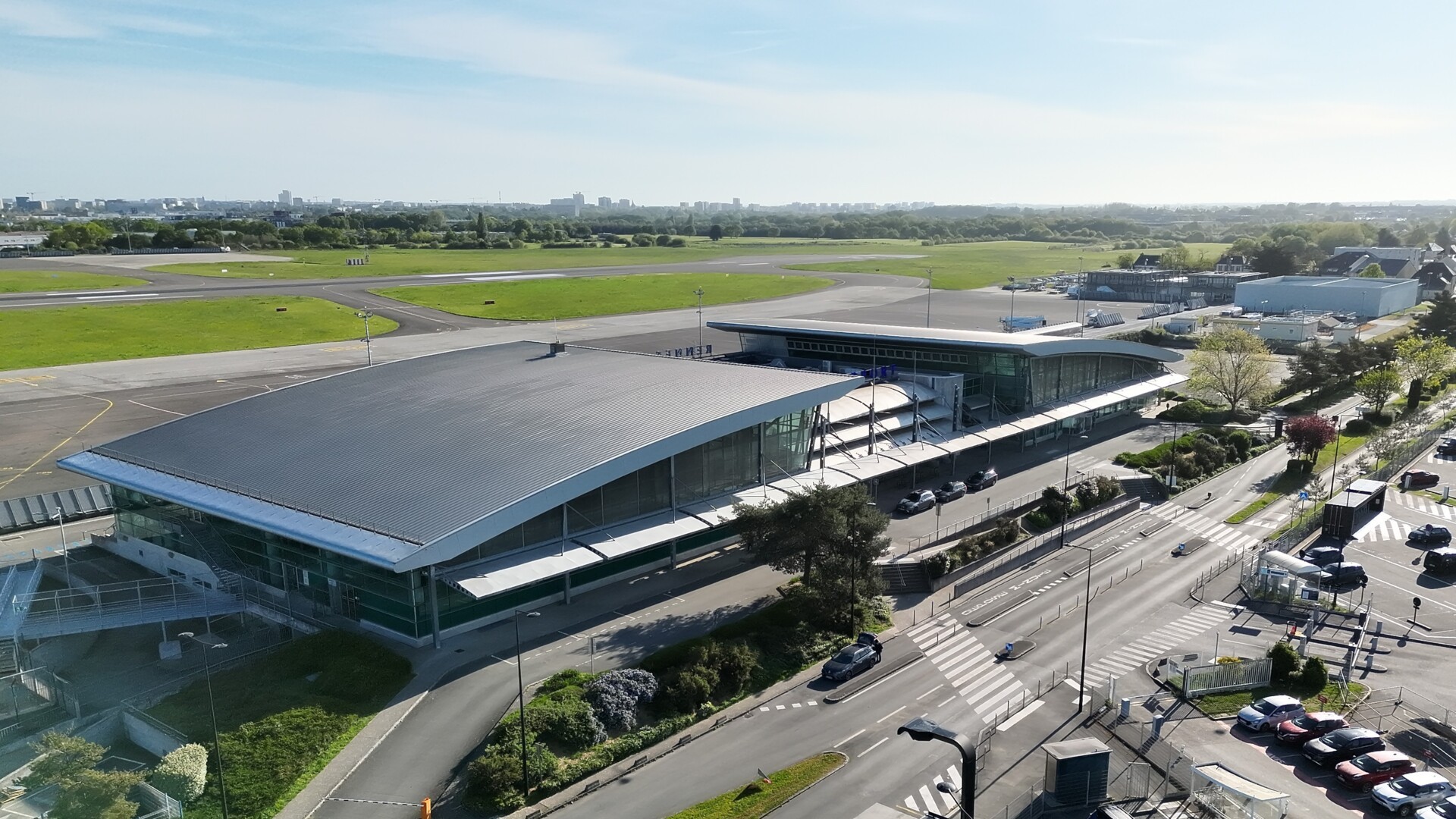
The airport modernization project will be unveiled in the fall of 2026 by the President of the Brittany Region and the members of the shareholder group.
Nicolas Notebaert, Chief Executive Officer of Concessions at VINCI and President of VINCI Airports, stated: “ We welcome the Brittany Region's choice of the project we are undertaking with the Ille-et-Vilaine Chamber of Commerce. It testifies to the quality of our long-standing partnership with the local authority. This trust is both an honor and a responsibility. Now, let's get to work implementing a modernization and development of the two platforms that fully leverages their unique characteristics and complementarity: Rennes airport as the gateway to Brittany, serving the mobility of local people and businesses, and Dinard airport as an industrial excellence cluster contributing to employment and the region's economic dynamism .”
Jean-Philippe Crocq, President of the Ille-et-Vilaine Chamber of Commerce and Industry, added: “ This decision is excellent news for Brittany and its economy. The Rennes and Dinard airports are strategic infrastructures for the attractiveness of our region. We are particularly proud that the Region has selected a project that combines economic ambition, environmental responsibility, and tourism development. As shareholders and operational partners, the Ille-et-Vilaine Chamber of Commerce and SEALAR will play their full part in making these two platforms true engines of domestic economic development, serving businesses, people, and the region. ”
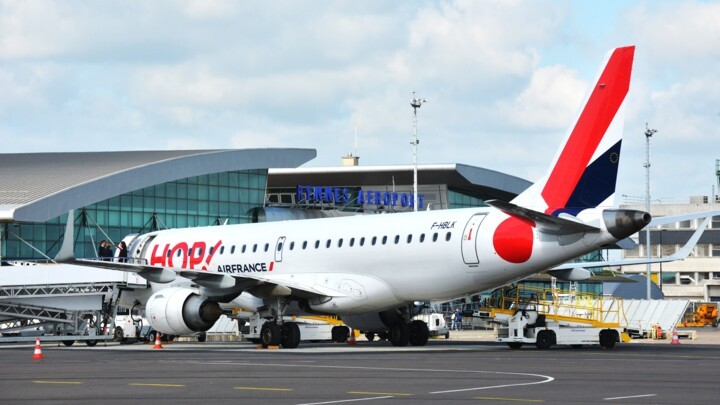
Rennes Bretagne airport serves 200 destinations with direct scheduled flights and flights with stopovers. By 2026, 15 destinations are served directly, including 8 in France: Ajaccio (Air Corsica and Transavia), Bastia (Air Corsica), Paris CDG (Air France), Lyon (Air France and Twin Jet), Marseille (Volotea), Montpellier (Volotea), Nice (easyJet), and Toulouse (Volotea and Twin Jet), and 7 international destinations: Amsterdam (KLM), Dublin (Aer Lingus), Geneva (easyJet), London Gatwick (easyJet), Manchester (easyJet), Marrakech (Transavia) and Seville (easyJet).
Rennes is also the 8th largest regional freight hub in France. In 2025, Rennes Bretagne airport handled 512,000 passengers and transported over 10,000 tonnes of freight.
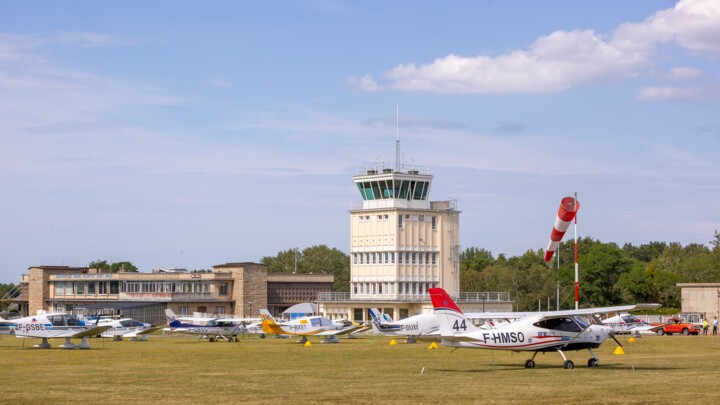
Dinard Bretagne airport welcomes light and business aviation and is distinguished by the companies located there, making it a leading industrial hub on the Emerald Coast.
For more information:
VINCI Airports, as the leading private airport operator in the world, manages the development and operation of more than 70 airports located in 14 countries. VINCI Airports draws on its expertise as a comprehensive integrator to develop, finance, build and operate airports, leveraging its investment capability and know-how to optimise operational performance and modernise infrastructure while bringing about their environmental transition. In 2016, VINCI Airports became the first airport operator to commit to an international environmental strategy, setting itself the aim of reaching zero net emissions (scope 1 and 2) across the network by 2050 while supporting its stakeholders’ transition.
For more information:
The Ille-et-Vilaine Chamber of Commerce and Industry (CCI) is a public institution governed by business leaders elected by their peers. Thanks to its strategic territorial network, the CCI Ille-et-Vilaine is closely aligned with the needs and aspirations of businesses and local stakeholders. It fosters ongoing dialogue and provides tailored support to boost local economic development. As part of its regional service mission, the CCI Ille-et-Vilaine is involved in the management and operation of strategic economic infrastructure, directly contributing to the region's attractiveness, competitiveness, and reindustrialization. Its participation in the management and operation of Rennes and Dinard airports is consistent with this approach and ensures that local economic stakeholders receive special attention to the challenges of regional development.
SEALAR is positioning itself as a new airport operator in France, with a development strategy focused on managing local airports, often underutilized or undergoing a redefinition of their business model. It adopts an agile and sustainable management approach, combining economic performance, operational excellence, and strong local ties thanks to its close relationships with Chambers of Commerce and Industry (CCI). SEALAR targets a mixed market: low-cost commercial aviation traffic, business aviation, light freight, and related activities (aircraft maintenance, training, business tourism).