VINCI Airports celebrates Porto airport’s 80th anniversary with the inauguration of a new operations centre and a fully renovated runway
- Francisco Sá Carneiro Airport reaches a record 16.9 million passengers in 2025, up 6.3% compared to 2024, and a 166% growth since VINCI Airports has taken over operations in 2012.
- More than 120 direct destinations now connect Northern Portugal to Europe, the Americas and Africa.
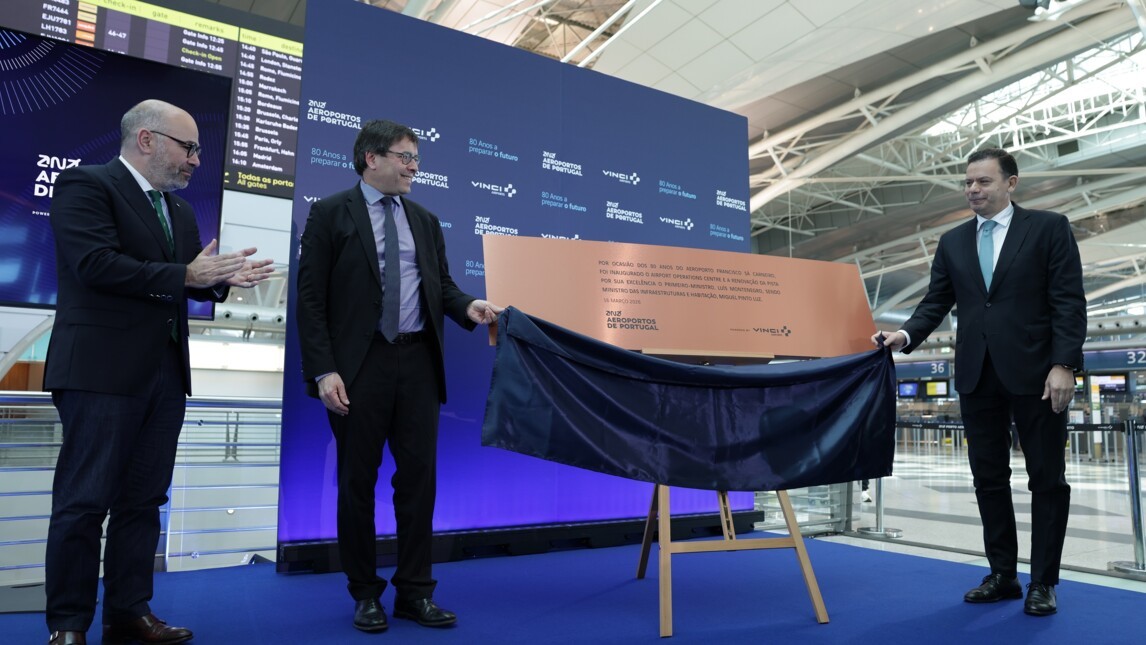
- A €50 million runway renovation project was officially inaugurated in presence of Prime Minister Luís Montenegro.
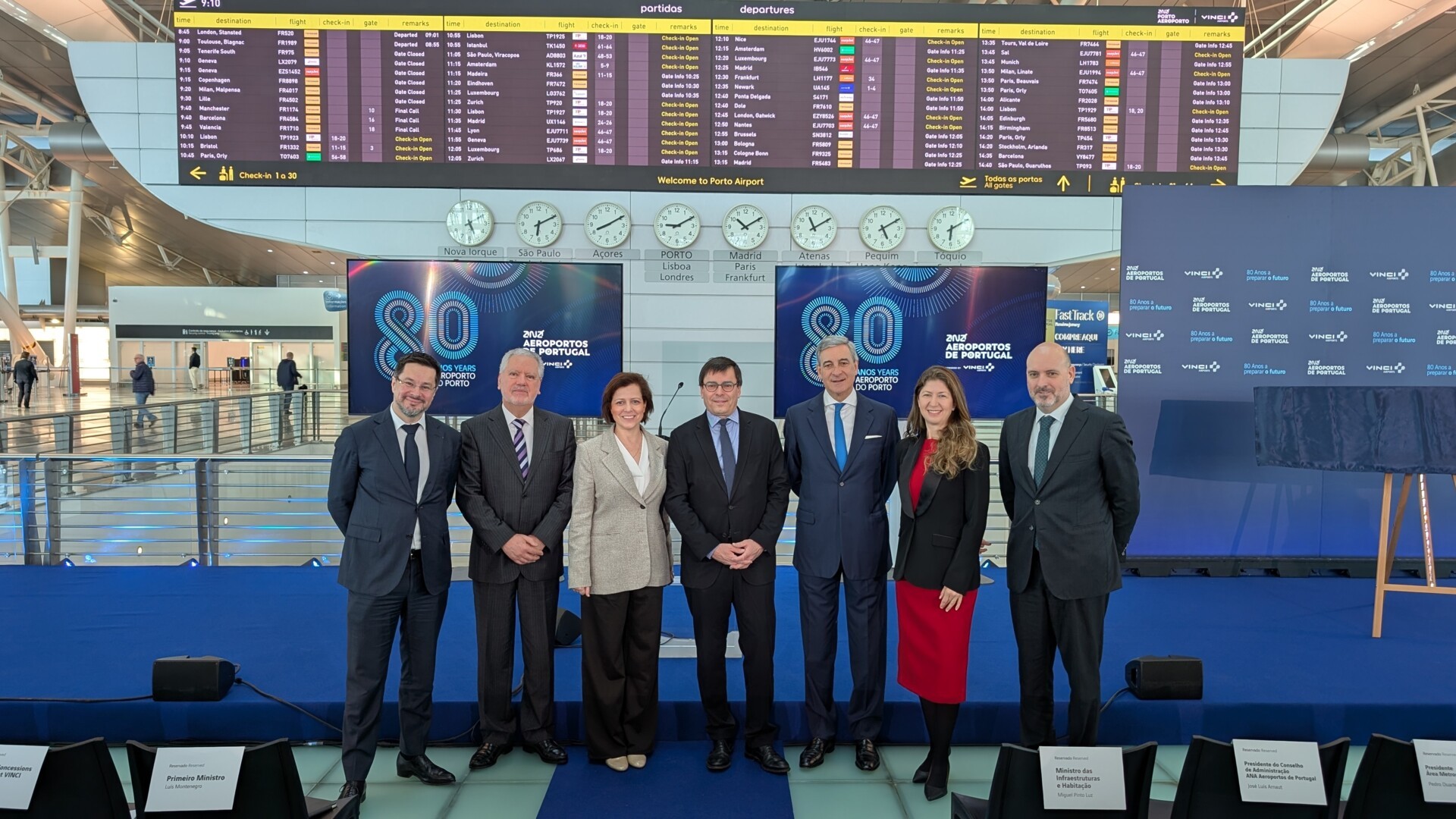
- The airport celebrates 80 years of operations, reaffirming its role as the main gateway to the north-west of the Iberian Peninsula.
VINCI Airports, shareholder of ANA Aeroportos de Portugal, is celebrating the 80th anniversary of Francisco Sá Carneiro Airport, a strategic asset within its global airport network and a key driver of economic, social and tourism development in Northern Portugal.
In 2025, Porto Airport handled 16.9 million passengers, its highest traffic level to date, confirming a sustained growth trajectory. With more than 120 direct destinations, the airport plays a central role in enhancing Portugal’s international connectivity and reinforcing the attractiveness of the north-west of the Iberian Peninsula.
On March 16, VINCI Airports officially inaugurated the new Operations Coordination Centre and the fully renovated runway at Porto Airport, in presence of the Portuguese Prime Minister, Luís Montenegro. Representing a €50 million investment, the largest ever made at the airport, the project was completed over 19 months and includes:
Full runway resurfacing
Modernisation of drainage systems
Replacement of airfield lighting with LED technology
Installation of a category II Instrument Landing System (ILS), enabling operations in low-visibility conditions.
These upgrades significantly enhance operational performance, safety and resilience, while supporting future traffic growth.
Besides, VINCI Airports is implementing a comprehensive modernisation programme at Porto Airport, focused on improving both operational efficiency and passenger experience. Key projects already delivered or underway include:
Refurbishment of the departures area
Expansion and renovation of the lounge (800 m², 200 seats)
Modernisation of Fast Track services and reinforcement of priority lanes
Deployment of Self Bag Drop
Expansion and modernisation of the Duty-Free store
Creation of new waiting and entertainment areas, as well as pet relief areas
To address the expected increase in traffic in the coming years, an Airport Master Plan, including the construction of new boarding gates for domestic and international flights, has also been presented to the Government. Other major projects are also under consideration: a new maintenance hangar to be built by TAP airline and the future high-speed rail line planned by the Government. All these investments will further strengthen Porto airport’s strategic role in Portugal and the Iberian Peninsula.
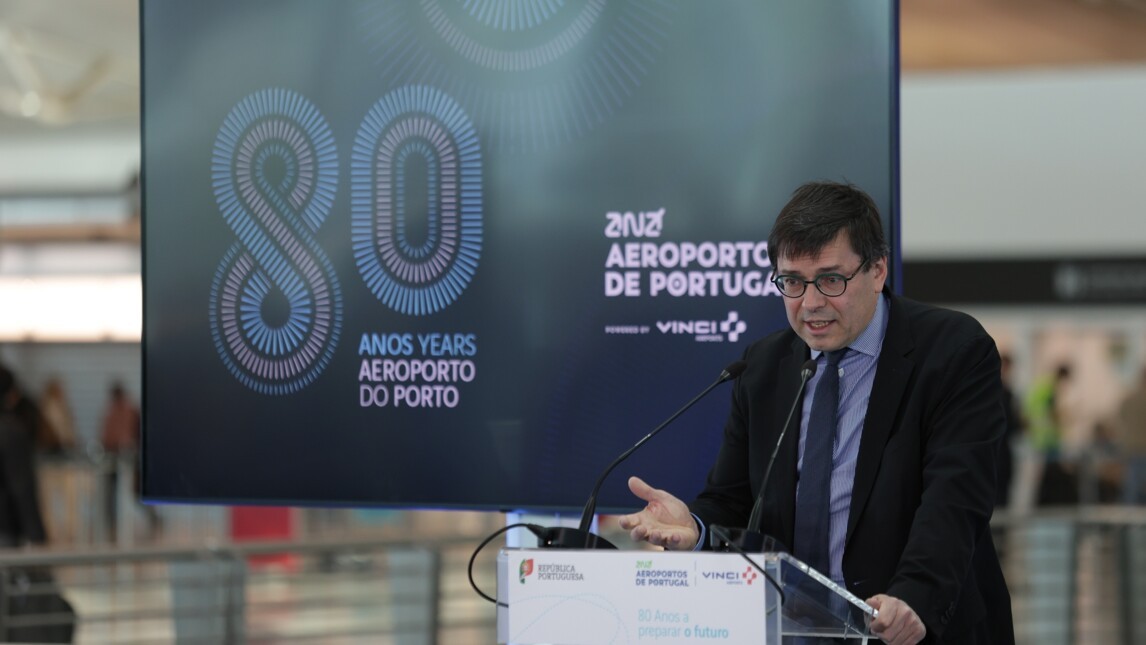
According to Nicolas Notebaert, Chief Executive Officer of VINCI Concessions and President of VINCI Airports: “Celebrating 80 years of Porto Airport means looking ahead. We are building a more modern, more efficient and more sustainable airport, designed to support the growth of a dynamic region and to represent Portugal with excellence on the international stage. In Porto, we are developing the airport – in terms of both traffic and infrastructure – and we will continue to invest for the future, as we do in all Portuguese airports.”
VINCI Airports, as the leading private airport operator in the world, manages the development and operation of more than 70 airports located in 14 countries. VINCI Airports draws on its expertise as a comprehensive integrator to develop, finance, build and operate airports, leveraging its investment capability and know-how to optimise operational performance and modernise infrastructure while bringing about their environmental transition. In 2016, VINCI Airports became the first airport operator to commit to an international environmental strategy, setting itself the aim of reaching zero net emissions (scope 1 and 2) across the network by 2050 while supporting its stakeholders’ transition.
For more information: