VINCI Airports announces the most significant investment plan in Edinburgh Airport’s history: £500 million over five years to support its growth
- VINCI Airports has unveiled the largest investment program in Edinburgh Airport’s history
- £500 million to be invested over the next five years to expand and modernize the terminal
- A major transformation aimed at supporting traffic growth and enhancing passenger experience
VINCI Airports has announced a £500 million investment program over the next five years to support the development of Edinburgh Airport, Scotland’s busiest airport. As the most significant investment ever made in the airport’s history, this project represents a new milestone in its development and demonstrates the commitment of VINCI Airports and its co-shareholder Global Infrastructure Partners (GIP) to support the airport’s ambition to become an ever more efficient, connected, and sustainable infrastructure.
Since joining the VINCI Airports network in 2024, Edinburgh Airport has been on a sustained growth trajectory. In the 2025, the airport welcomed nearly 17 million passengers, a 7.5% increase compared to the same period in 2025.
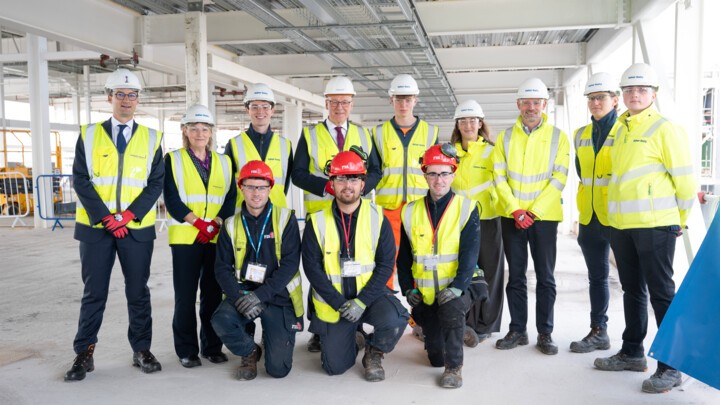
This flagship program is part of this dynamic and will profoundly transform the airport’s infrastructure to increase its capacity, streamline passenger flows, and strengthen its operational performance. Key initiatives include:
- New gates to support route growth
- New aircraft stands to handle more aircraft movements
- An expanded check-in hall and departure lounge to improve passenger flow and comfort
- A terminal footprint increase of 60%
- New and improved retail, food, and beverage areas, offering more choice for passengers
- New international arrival facilities and baggage make-up and reclaim areas
This five-year plan constitutes the first phase of a project designed to ensure that Edinburgh Airport can sustainably and efficiently meet demand while continuing to play a key role in Scotland’s economy. The transformation will enable the development of new air routes, further strengthening Scotland’s connectivity with Europe, North America, the Middle East, Asia, and other international markets.
The investments will also contribute to the airport’s environmental ambitions through upgraded infrastructure and the integration of low carbon solutions to help reduce its carbon footprint.
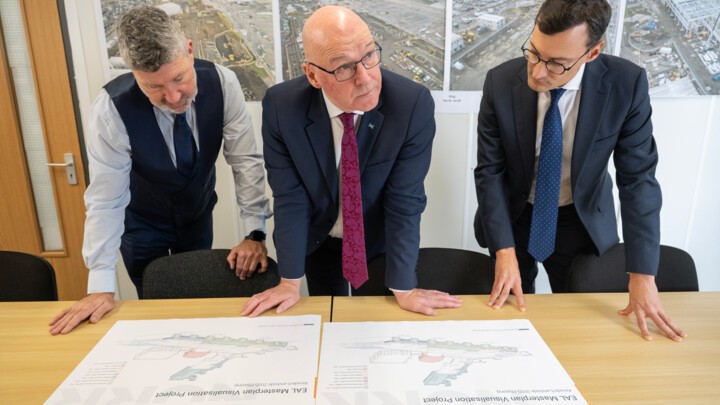
During the launch ceremony of the project, John Swinney, First Minister of Scotland, said : “This significant investment will enable Edinburgh Airport to compete with airports around the world. Alongside delivering real benefits to passengers, this boost will support Scotland’s international connections and help drive economic growth. Scotland is open for business and we want to maintain and strengthen Scotland’s position as the most attractive place in the UK for inward investment outside of London and the South East. Opportunities like this airport expansion will help make that happen.”
Rémi Maumon de Longevialle, CEO of VINCI Airports, stated: “Edinburgh has become a strategic airport within the VINCI Airports network. This £500 million investment underscores our confidence in the airport’s growth prospects and our long-term commitment to supporting its development. It will enable us to increase its capacity while delivering an ever higher quality experience for passengers, thereby consolidating Edinburgh’s role as Scotland’s leading international gateway.”
VINCI Airports, as the leading private airport operator in the world, manages the development and operation of more than 70 airports located in 14 countries. VINCI Airports draws on its expertise as a comprehensive integrator to develop, finance, build and operate airports, leveraging its investment capability and know-how to optimise operational performance and modernise infrastructure while bringing about their environmental transition. In 2016, VINCI Airports became the first airport operator to commit to an international environmental strategy, setting itself the aim of reaching zero net emissions (scope 1 and 2) across the network by 2050 while supporting its stakeholders’ transition.