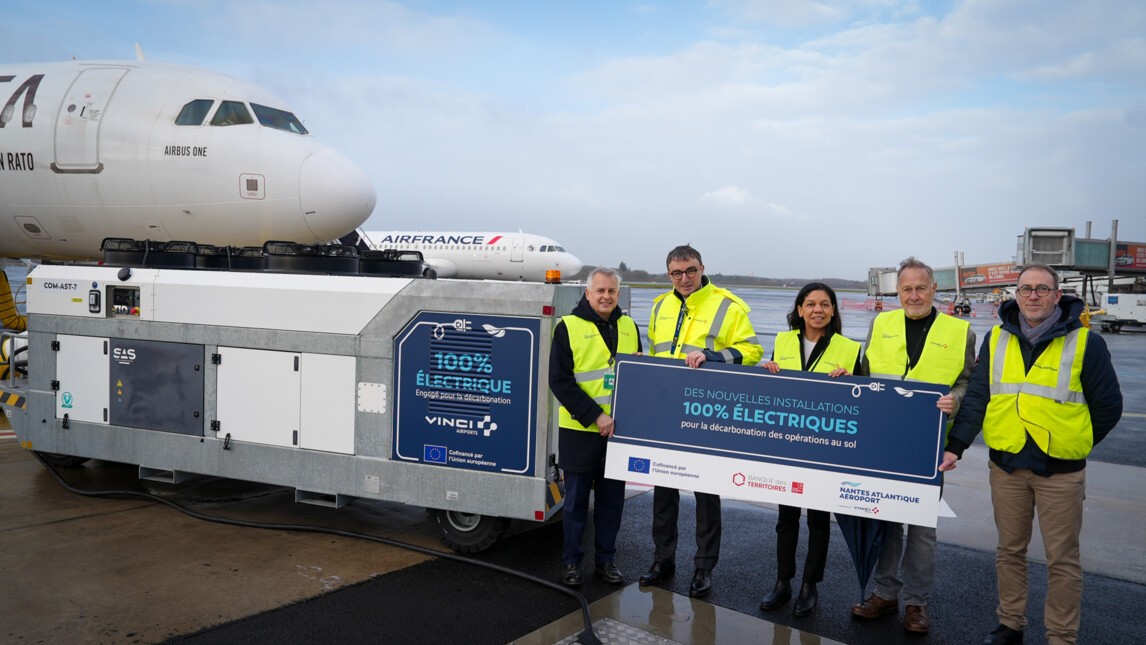
Nantes Atlantique: new electrical infrastructure commissioned to decarbonise ground operations
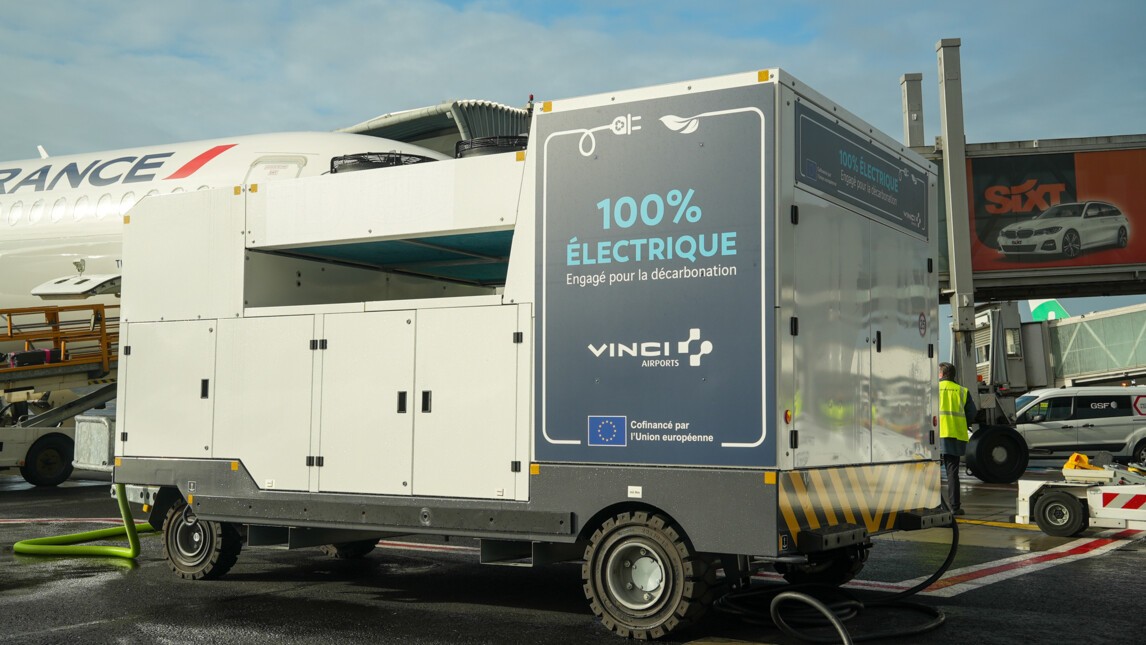
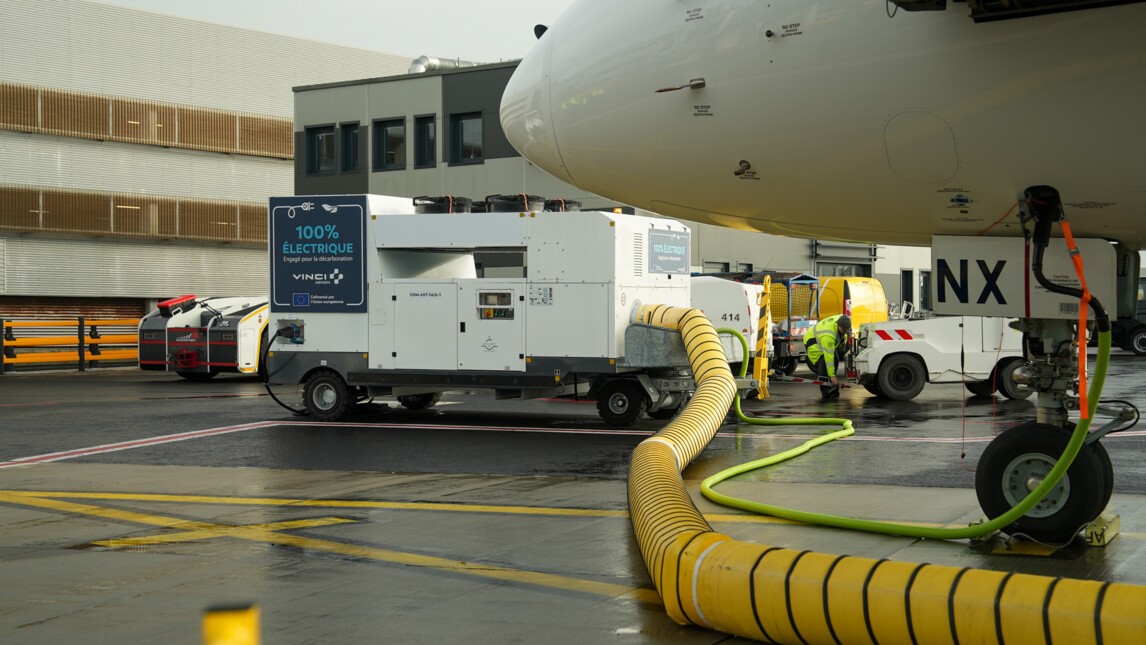
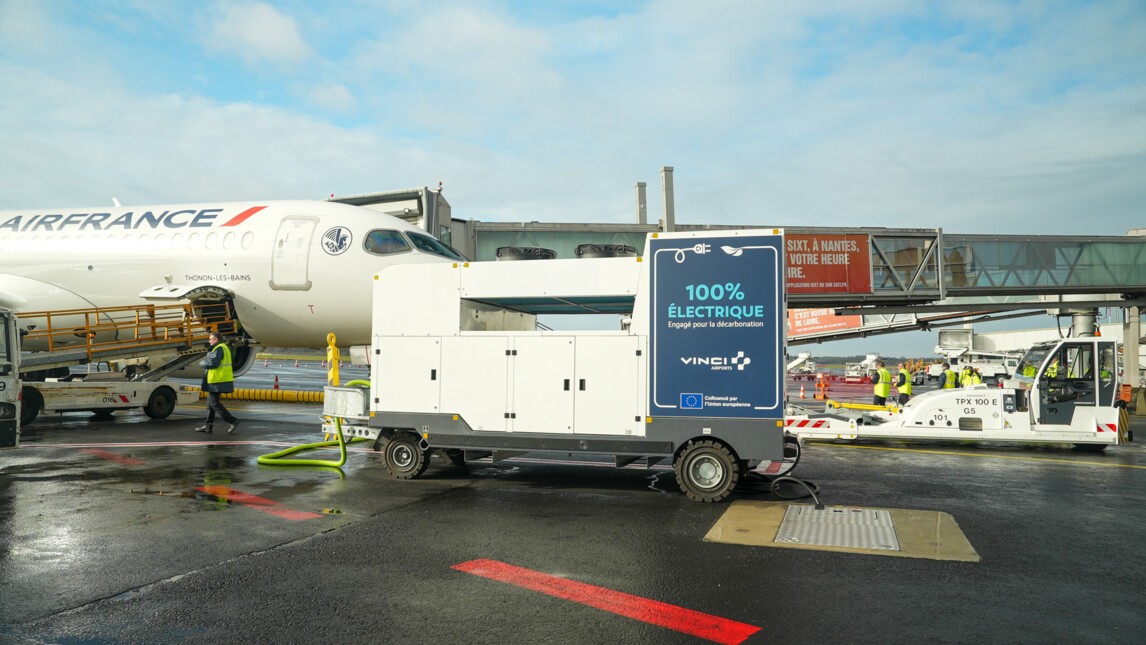
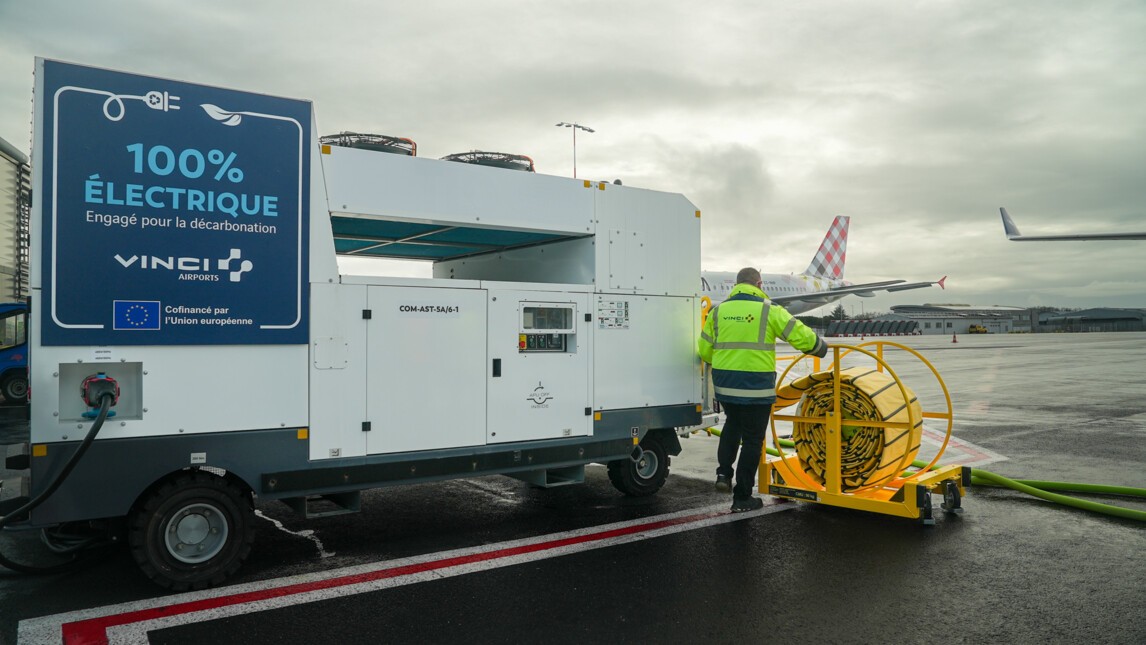
After 15 months of construction work and an investment of €15 million, Nantes Atlantique Airport has commissioned new electrical infrastructure designed to significantly reduce emissions from ground operations. The airport now features 12 electrified aircraft stands and 100 additional electric charging points for airside vehicles and ground support equipment, fully aligned with VINCI Airports’ environmental strategy and the European regulation to decarbonise the aviation sector.
The electrification of ground operations is an immediate lever for reducing the carbon footprint of airlines and ground handling companies, which account for an airport’s indirect emissions (Scope 3). Thanks to these new facilities, aircraft parked at contact stands can now be supplied with electricity and air conditioning without using auxiliary power units or thermal equipment.
At the same time, the airport has deployed 100 electric charging points across the apron: 7.4 kW chargers for light vehicles, 120 kW chargers for buses, as well as sockets adapted for baggage tractors and refuelling vehicles. This modernisation significantly reduces the use of fossil fuels and can cut greenhouse gas emissions from ground operations by up to 50%.
With a total investment of €15 million, the project was funded 70% by Aéroports du Grand Ouest (AGO), with 30% support from the European Union and backing from Banque des Territoires. It meets the requirements of the European AFIR regulation (Alternative Fuels Infrastructure Regulation), which mandates the electrification of aircraft stands by 2030.
This initiative is also part of VINCI Airports’ environmental strategy, which aims to achieve net zero emissions across its airports in the European Union and the United Kingdom by 2030.
“By electrifying aircraft stands and deploying charging stations for ground support equipment, we are helping to reduce emissions from airlines and ground handling companies. This is fully in line with the strategy we are pursuing to reduce the environmental impact of airport activities. This commitment, led by VINCI Airports since 2016, is part of a comprehensive approach to reducing CO₂ emissions from our own airport operations while also addressing those generated by third parties,” said Guillaume Dubois, Chairman of Aéroports du Grand Ouest and CEO of Nantes Atlantique Airport.
“By electrifying its ground services, Nantes Atlantique Airport is positioning itself among Europe’s leading airports, firmly committed to the decarbonisation of the aviation sector. With a grant of nearly €4.5 million, the European Union has supported this initiative, which represents a major step forward towards a sustainable, low-carbon airport model, both in the Pays de la Loire region and across Europe, directly contributing to European climate ambitions,” added Richard Ferrer, Head of the Alternative Fuels Sector at the European Climate, Infrastructure and Environment Executive Agency (CINEA).
VINCI Airports, as the leading private airport operator in the world, manages the development and operation of more than 70 airports located in 14 countries. VINCI Airports draws on its expertise as a comprehensive integrator to develop, finance, build and operate airports, leveraging its investment capability and know-how to optimise operational performance and modernise infrastructure while bringing about their environmental transition. In 2016, VINCI Airports became the first airport operator to commit to an international environmental strategy, setting itself the aim of reaching zero net emissions (scope 1 and 2) across the network by 2050 while supporting its stakeholders’ transition.